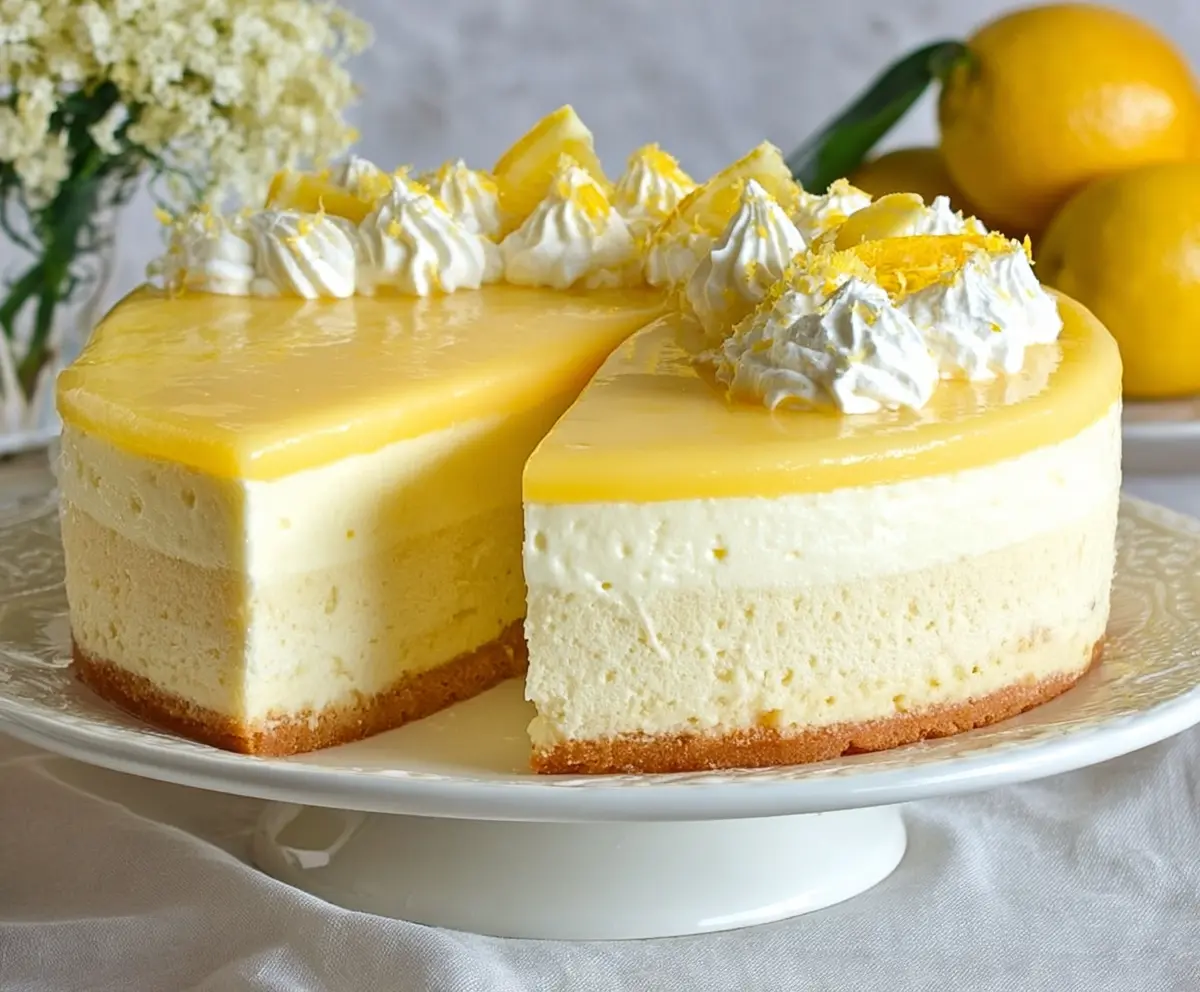
This Lemon Mousse Cake is a light and fluffy dessert that bursts with fresh lemon flavor. It’s perfect for those who love a zesty treat that feels fancy but is fun to make!
I love serving this cake chilled on warm days. It’s so refreshing that you might find yourself going back for seconds—just be ready to share! 🍋
Key Ingredients & Substitutions
Graham Cracker Crumbs: These are essential for the crust, but if you can’t find them, digestive biscuit crumbs work well too. For a gluten-free option, try almond flour or gluten-free cookies.
Heavy Cream: This gives the mousse its creamy texture. If you’re looking for a lighter version, you can use whipped coconut cream as a dairy-free alternative.
Lemon Juice: Freshly squeezed lemon juice is key for brightness. If you’re in a pinch, bottled lemon juice can work, but fresh is always best for flavor. You can also adjust the quantity based on your taste preference.
Gelatin: I use powdered gelatin for easy measuring, but leaf gelatin is a great substitute if you have it. Just remember to follow the package instructions for blooming.
Egg Whites: They are crucial for the airy texture of the mousse. Egg substitutes like aquafaba can be used for a vegan option, whipping it until it forms stiff peaks.
How Do I Get the Lemon Mousse to Set Properly?
The setting of the mousse relies on properly blooming and incorporating the gelatin. Make sure to follow these steps:
- For powdered gelatin, sprinkle it over cold lemon juice and let it sit for 5 minutes to bloom. This hydrates the gelatin.
- Gently heat the bloomed gelatin until it’s dissolved, but do not boil; this ensures it retains its gelling properties.
- When folding the meringue and lemon mixture into the whipped cream, be gentle. This keeps the mousse light and airy, letting it set beautifully in the fridge.
Also, ensure the mousse is in the refrigerator for at least 1-2 hours. If it’s too warm, it may not set properly when you add the glaze.
Remember, patience is important. The longer it chills, the better the texture. Happy baking!

How to Make a Delicious Lemon Mousse Cake
Ingredients You Will Need:
For the Crust:
- 1 1/2 cups (150g) graham cracker crumbs or digestive biscuit crumbs
- 1/3 cup (75g) unsalted butter, melted
- 2 tbsp sugar
For the Lemon Mousse:
- 2 cups (480 ml) heavy cream, cold
- 1 cup (240 ml) lemon juice (freshly squeezed)
- 1/2 cup (100g) granulated sugar
- 4 tsp powdered gelatin (or about 2 tbsp leaf gelatin)
- 4 large egg whites
- Zest of 2 lemons, divided
For the Lemon Glaze:
- 1 cup (240 ml) lemon juice (freshly squeezed)
- 1 cup (200g) granulated sugar
- 3 tbsp cornstarch
- 2 large egg yolks
- 2 tbsp unsalted butter
For Decoration:
- Whipped cream
- Lemon slices or lemon zest
How Much Time Will You Need?
This delightful dessert takes about 20 minutes of active preparation, plus chilling time. You’ll need around 1-2 hours for the mousse to set initially, followed by another 2-3 hours for the glaze to firm up in the refrigerator. So, get ready to enjoy your cake in a few hours!
Step-by-Step Instructions:
1. Preparing the Crust:
First, preheat your oven to 350°F (175°C). In a mixing bowl, combine the graham cracker crumbs, sugar, and melted butter. Stir it all together until it looks like wet sand. Now, press this mixture evenly into the bottom of a 9-inch (23 cm) springform pan to make the crust. Bake it for about 8-10 minutes or until it’s golden brown. Once done, take it out of the oven and let it cool completely.
2. Preparing the Lemon Mousse:
While the crust is cooling, let’s work on the mousse. Sprinkle the gelatin over 1/4 cup of cold lemon juice in a small bowl to let it bloom (this just means letting it sit for 5 minutes). In a saucepan, gently heat the bloomed gelatin with the lemon juice until it fully dissolves, then remove it from the heat and allow it to cool slightly.
Next, take a bowl and whip the cold heavy cream until soft peaks form. Set it aside for later. In another clean bowl, whisk the egg whites until soft peaks form, then gradually add the sugar, mixing until you have a stiff meringue. Now, gently fold the gelatin mixture into the whipped cream to combine. After that, gently fold in the meringue, being careful to keep the mixture light and fluffy. Finally, fold in the lemon zest and pour this lovely mousse over your cooled crust, smoothing out the top. Pop it in the fridge for 1-2 hours to set!
3. Preparing the Lemon Glaze:
Once your mousse is set, it’s time for the glaze! In a saucepan, whisk together the lemon juice, granulated sugar, cornstarch, and egg yolks until everything is smooth. Place the saucepan over medium heat and stir constantly until the mixture thickens and starts to boil. Don’t forget to remove it from the heat and stir in the butter until it melts and becomes smooth. Allow the glaze to cool slightly, then carefully pour it over the set mousse. Return the cake to the fridge and chill for at least 2-3 hours to let the glaze firm up.
4. Decorating and Serving:
When you’re ready to serve, pipe some whipped cream around the top edge of the cake for a decorative touch. You can add lemon slices or extra lemon zest on top of the whipped cream. Carefully remove the sides of the springform pan, then slice your cake into pieces. Serve chilled and enjoy your refreshing Lemon Mousse Cake!
Indulge in the light, creamy texture and zesty lemon flavor of your homemade dessert. Happy baking!
Can I Use a Different Type of Crust?
Absolutely! If you want to switch things up, you can use crushed Oreos for a chocolate twist or a nut-based crust like almond flour mixed with butter for a gluten-free option.
How Do I Store Leftover Lemon Mousse Cake?
Store any leftovers in an airtight container in the fridge for up to 3 days. If possible, keep the whipped cream separate until you’re ready to serve so it stays fresh longer.
What If I Don’t Have Fresh Lemons?
If you don’t have fresh lemons, bottled lemon juice can be used as a substitute. However, fresh lemon juice gives the cake a brighter, more vibrant flavor compared to bottled options.
Can I Make This Recipe Vegan?
Yes! For a vegan version, use coconut cream instead of heavy cream, aquafaba instead of egg whites, and substitute a plant-based gelatin alternative, such as agar-agar. Adjust the sweetness to taste!