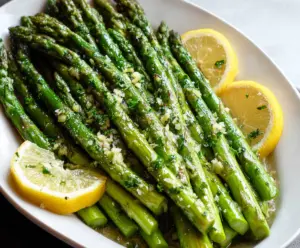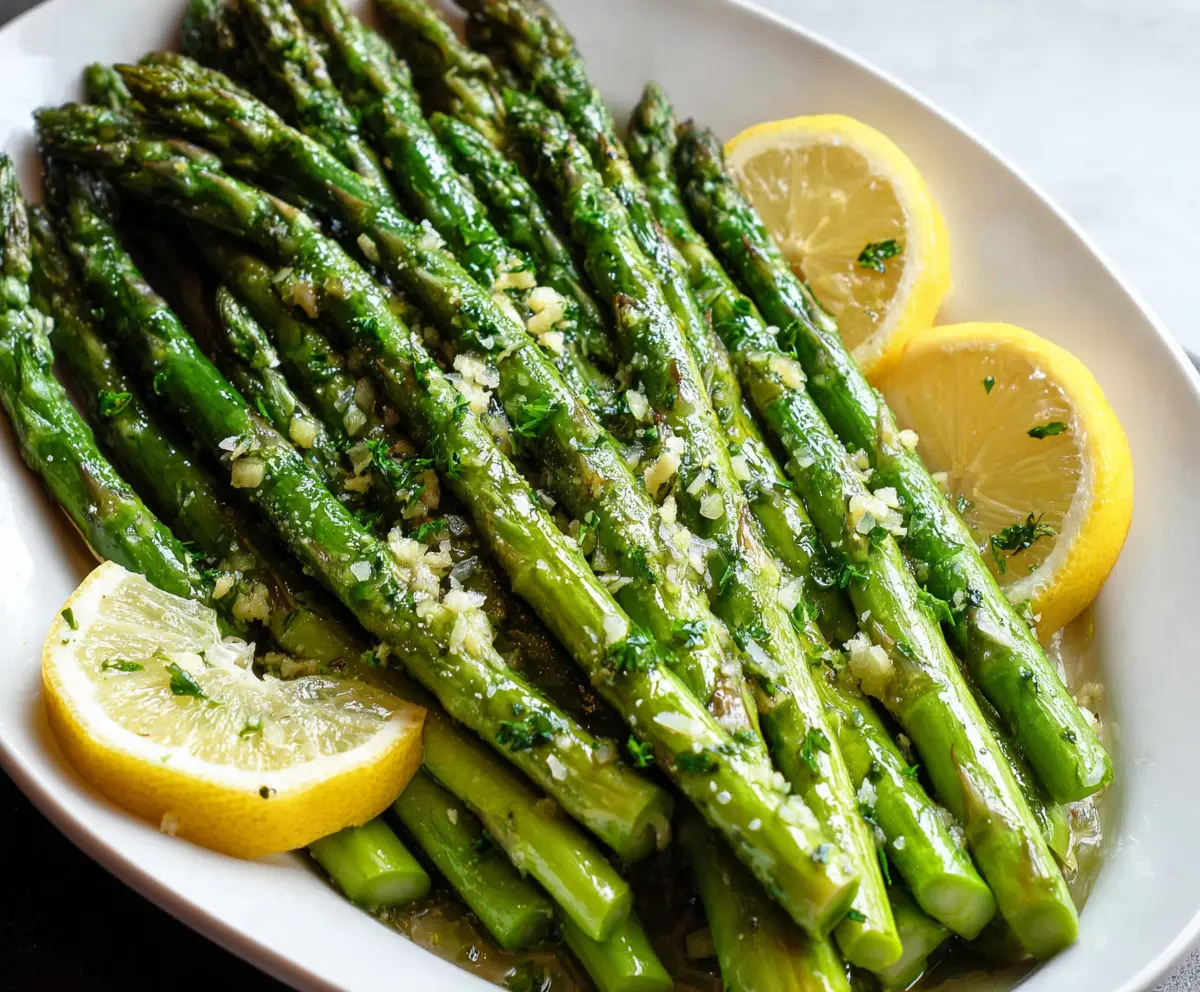
Lemon Garlic Asparagus is a bright and tasty side dish that adds a burst of flavor to any meal. It’s quick to make, using fresh asparagus, zesty lemon, and aromatic garlic.
I love how easy it is to whip up. Just toss the asparagus with garlic, squeeze some lemon juice, and roast it. It makes veggies feel special, and your kitchen will smell amazing!
Key Ingredients & Substitutions
Asparagus: Fresh asparagus is key here. Look for bright green stems with firm tips. If you can’t find asparagus, green beans or broccoli can work well as alternatives.
Olive Oil: I used extra-virgin olive oil for its rich flavor. Canola or avocado oil could be used too if you prefer a milder taste.
Garlic: Fresh garlic enhances the dish beautifully. If you’re short on time, garlic powder can substitute, but use less since it’s stronger. I love using roasted garlic for a sweeter touch!
Lemon: Fresh lemon juice and zest bring brightness. If lemons aren’t handy, try using lime juice for a different citrus flavor.
Parsley: While optional, fresh parsley adds a pop of color and freshness. You can swap it with fresh basil or omit it if you prefer.
How Do I Sauté Garlic Without Burning It?
Sautéing garlic is easy but can lead to bitterness if burnt. Here’s how to do it right:
- Start with medium heat to control the cooking process.
- Use a good quality olive oil, adding it to the preheated skillet.
- Add minced garlic and stir often for about one minute, just until fragrant—keep a close eye on it!
- If it starts to turn golden brown, lower the heat immediately.
Remember, the goal is that lovely garlic smell, not burnt bits. Happy cooking!
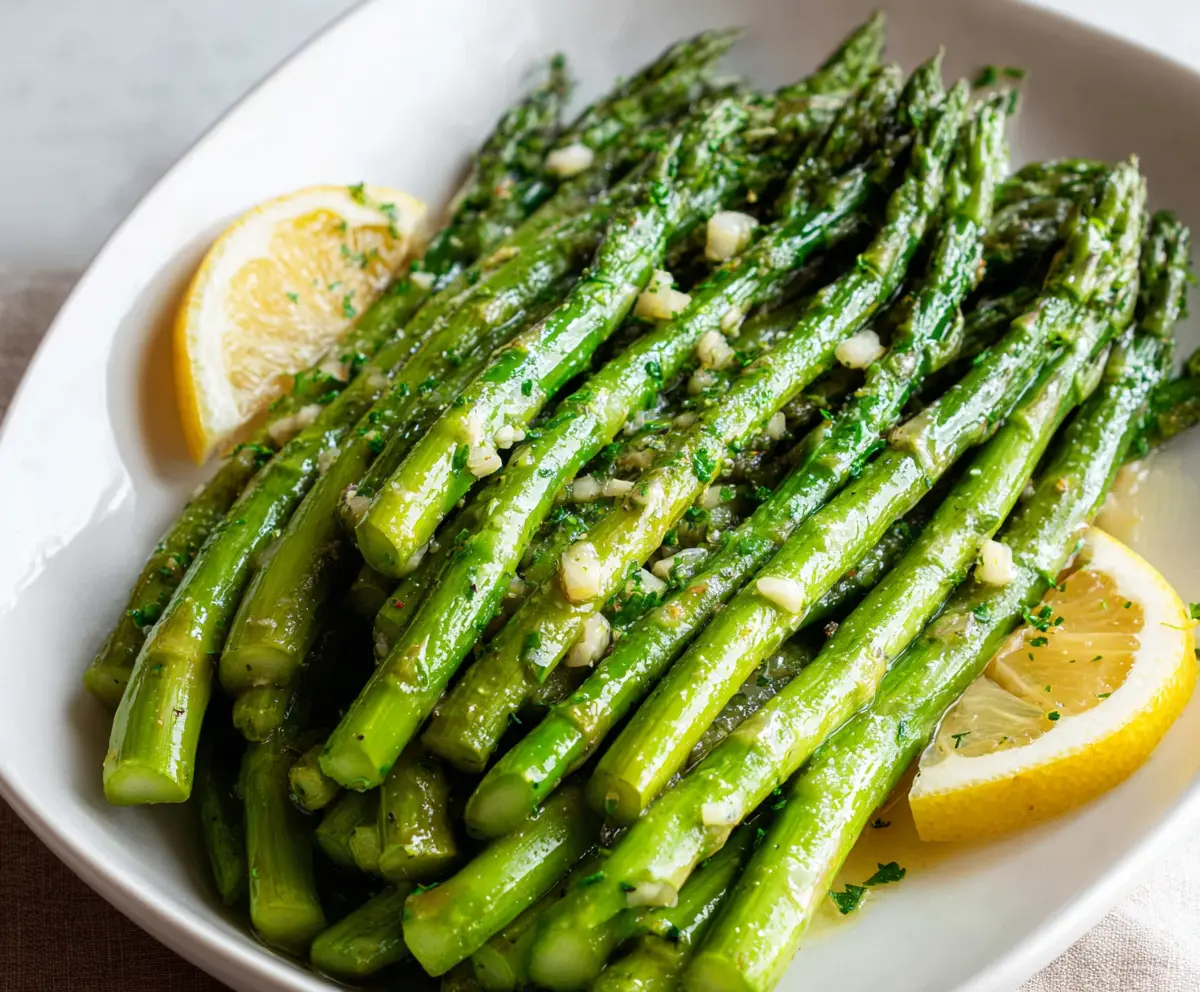
How to Make Lemon Garlic Asparagus?
Ingredients You’ll Need:
For the Asparagus:
- 1 bunch fresh asparagus (about 1 lb), trimmed
- 2 tablespoons olive oil
- 3 cloves garlic, minced
- 1 lemon (zested and juiced)
- Salt, to taste
- Freshly ground black pepper, to taste
- 1 tablespoon fresh parsley, chopped (optional for garnish)
- Lemon slices, for garnish
How Much Time Will You Need?
This Lemon Garlic Asparagus dish takes about 10 minutes to prepare and cook. So, a quick and tasty addition to your meal can be ready in no time! Perfect for a busy weeknight or a fresh side dish for a dinner gathering.
Step-by-Step Instructions:
1. Prepare the Asparagus:
Start by rinsing the asparagus spears under cold water to clean them. Then, trim off the woody ends, usually about 1-2 inches from the bottom, so that only the tender parts remain.
2. Heat the Oil:
In a large skillet, pour in the olive oil and heat it over medium heat. Let the oil warm up a little; you’ll know it’s ready when it shimmers slightly.
3. Sauté the Garlic:
Add the minced garlic to the hot oil. Sauté it for about 1 minute, stirring constantly. You want it to smell amazing but be careful not to let it burn, as burnt garlic can taste bitter.
4. Add the Asparagus:
Once the garlic is fragrant, toss the asparagus spears into the skillet. Stir them well, so they get coated evenly in the garlic and oil mixture.
5. Cook the Asparagus:
Cook the asparagus for about 5-7 minutes, turning them occasionally. They should turn bright green and become tender yet remain slightly crisp for the best texture.
6. Season the Asparagus:
Once cooked, sprinkle on some salt and freshly ground black pepper to your taste. Don’t be shy—this enhances the flavors!
7. Add Lemon Flavor:
Now, add lemon zest and squeeze the juice of the lemon all over the asparagus. Gently toss everything together to combine the flavors.
8. Serve it Up:
Remove the skillet from the heat and transfer the beautiful asparagus to a serving dish. Garnish it with finely chopped parsley and some lemon slices for a lovely presentation.
9. Enjoy!
Serve the Lemon Garlic Asparagus warm as a delightful side dish. Enjoy your fresh and flavorful creation!
Can I Use Frozen Asparagus for This Recipe?
Yes, you can use frozen asparagus, but be sure to thaw it first. Place it in the fridge overnight or run it under cold water for a quick thaw. Keep in mind that frozen asparagus may cook faster, so adjust your cooking time to avoid mushiness.
What Can I Substitute for Olive Oil?
If you’re looking for a substitute for olive oil, avocado oil or melted coconut oil will both work well. You can also use butter for a richer flavor, especially if you’re a fan of the buttery taste with garlic!
How to Store Leftovers?
Store any leftovers in an airtight container in the fridge for up to 3 days. To reheat, you can warm them gently in a skillet over low heat or in the microwave for a quick meal later!
Can I Add Other Vegetables?
Absolutely! Feel free to add or substitute other quick-cooking vegetables like bell peppers, zucchini, or cherry tomatoes. Just be sure to adjust cooking times as needed to keep everything tender yet crisp!